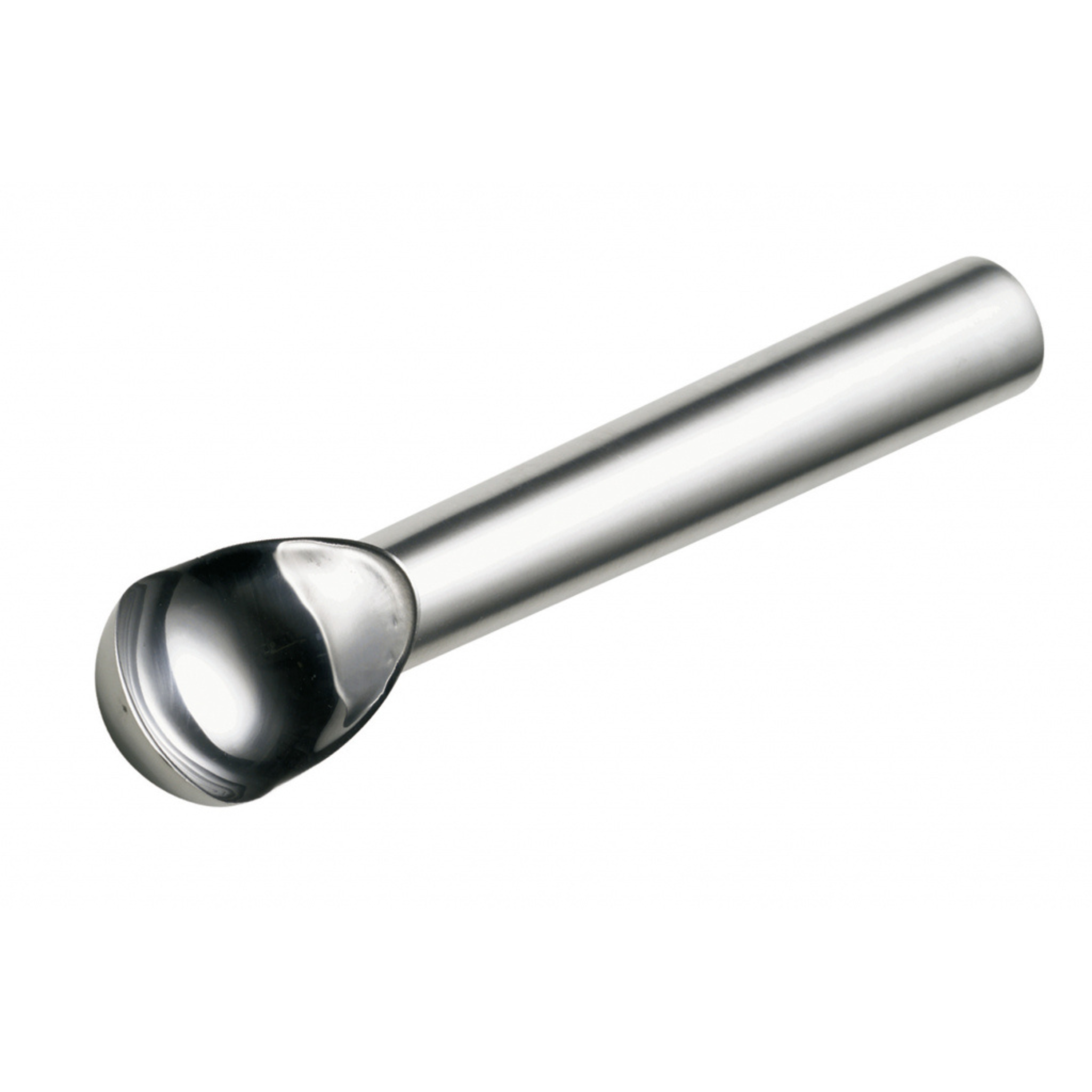
Buy a Stöckel ice cream scoop for the perfect scoop of ice cream
A Stöckel ice cream scoop is no ordinary kitchen tool — it's a professional instrument that has been the standard in ice cream parlors and Michelin-starred restaurants for decades. The German brand makes its ice cream scoops from solid aluminum, with an ergonomic handle that fits comfortably in the hand and a scooping head that glides effortlessly through even hard ice cream. You'll feel the difference immediately: less effort, better results, and a scoop that literally lasts for decades. Whether you occasionally prepare a dessert or scoop dozens of servings daily, a Stöckel pays for itself.
Ice dipper or ice portioning spoon: what suits you?
The collection features two Stöckel lines. The aluminum ice cream dippers are classic, one-piece ice cream scoops — robust, fast, and ideal for those who don't need a mechanism. The ice portioning spoons on the card have a heat-conducting liquid in the handle: the warmth of your hand flows to the scooping head, ensuring the ball releases effortlessly. This is great for working with hard ice cream from the freezer and the ideal model for hospitality or for home use if you scoop ice cream frequently. Both types are dishwasher safe and built to withstand years of intensive use.
Choosing the right size: from mini-scoop to generous dessert
Stöckel uses liter indications: 1/100 liter (Ø30 mm) is a mini-scoop for amuse-bouches or pralines, 1/40 (Ø45 mm) is a good size for coupes and cake decorations, 1/20 (Ø56 mm) is the classic "ice cream parlor scoop," and 1/4 (Ø100 mm) is a generous scoop for single-scoop desserts or bowls. If you're torn between two sizes, choose the slightly larger one — a scoop that's too small will make a lot of work out of a regular coupe. Order your Stöckel ice cream scoop online at Pogo-designshop and choose the size that suits your scooping style.
What is a heat-conducting ice cream scoop?A heat-conducting ice cream scoop has a special liquid in the handle that conducts the heat from your hand to the scooping head. This melts a thin layer on the outside of the ball, allowing it to release smoothly without having to thaw the ice cream beforehand.